22 Feb 2026 · 8 min read
What Is Answer Engine Optimization (AEO)?
AEO is the operating system for AI visibility. Learn how it differs from SEO, why citation share matters, and how to build a repeatable optimization process.
Answer Engine Optimization (AEO) is the practice of structuring your content so AI platforms like ChatGPT, Perplexity, and Google AI Overviews cite your brand as the answer, not just a link in the results. Where SEO wins a ranking, AEO wins a recommendation.
AEO is about making your content machine-readable, contextually clear, and trustworthy enough for LLM systems to quote directly in an answer. In practical terms, this means stronger entity clarity, explicit Q and A structure, and dependable evidence signals.
Search engines surface options. Answer engines make choices.
How Is AEO Different From SEO?
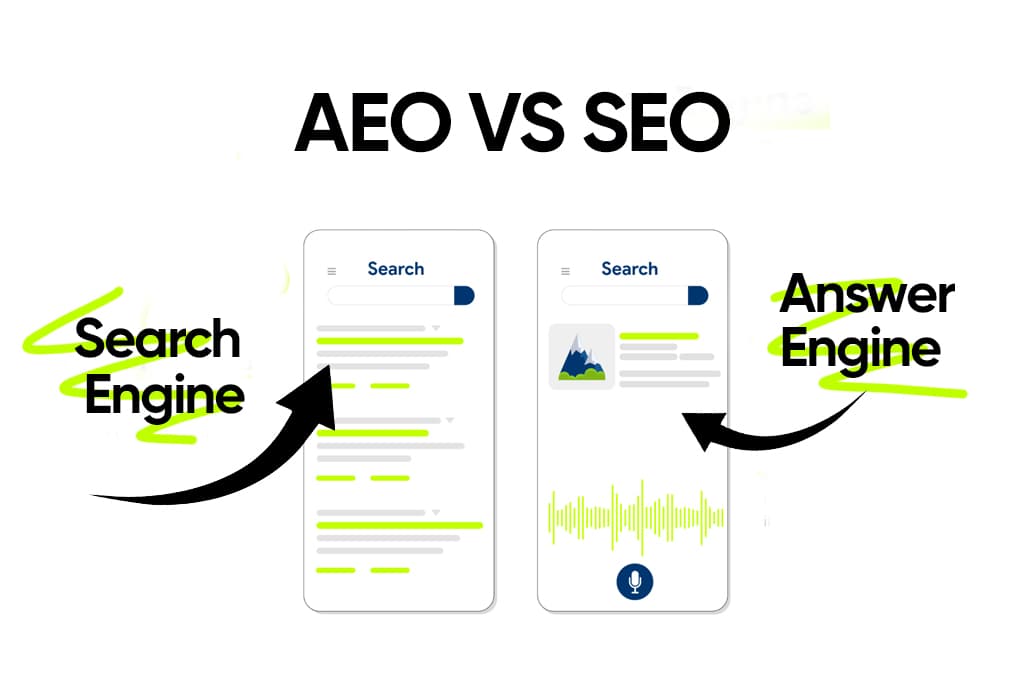
SEO and AEO overlap in fundamentals, but they are not the same execution model. SEO is optimized for ranking and clicks. AEO is optimized for direct citation in generated answers.
Traditional search sends users to your page. AI answers often synthesize your page before a user ever visits your site. If your content is not structured to be extracted and trusted quickly, you lose the citation even when your domain is strong.
| Dimension | SEO | AEO |
|---|---|---|
| Primary goal | Rank in search results | Be cited in AI-generated answers |
| Main signal shape | Keywords, links, technical health | Entity clarity, Q and A structure, trust signals |
| User flow | Click through to site | Read synthesized answer first |
| Core metric | Rankings and organic sessions | Citation frequency and AI share of voice |
Why AEO Is a Business Priority
AI interfaces are now a decision layer, not just a discovery layer. Buyers increasingly ask AI systems for shortlists, comparisons, and recommendations before visiting vendor websites.
That means brands can lose consideration before traffic analytics ever show a warning. If an answer engine never includes your name in the recommendation set, your funnel shrinks before click data captures the damage.
The Answer Engine Landscape
- ChatGPT: Massive conversational demand and high recommendation influence.
- Google AI Overviews: High-volume query exposure with direct synthesis behavior.
- Perplexity: Strong citation-oriented UX for research-heavy queries.
- Copilot: Enterprise context and real-time web grounding dynamics.
How To Apply AEO
- Audit current AI visibility. Run your real buyer queries across platforms and record who gets cited.
- Map citation gaps. Break gaps by topic cluster, intent type, and platform.
- Restructure key pages. Lead with direct answers and explicit headings that resolve intent fast.
- Add schema where it helps disambiguation. Prioritize organization, article, and FAQ-type structures.
- Strengthen E-E-A-T signals. Show clear authorship, dated updates, sources, and original evidence.
- Publish proprietary insights. Unique data is more cite-worthy than generic commentary.
- Track and iterate monthly. Treat AEO as ongoing operations, not a one-time update.
Measuring AEO: The New Dashboard
| Area | Legacy SEO Metric | AEO Metric |
|---|---|---|
| Visibility | SERP rank | Citation frequency |
| Category share | Keyword share | AI share of voice |
| Trust signal | Domain authority proxy | Citation sentiment and evidence quality |
| Competition | Rank gap | Competitor citation rate |
Frequently asked questions
Do I need AEO if I already invest in SEO?
Yes. SEO and AEO share foundations, but they optimize for different outcomes. AEO is specifically about citation and recommendation behavior in generated answers.
Is AEO relevant for niche or smaller brands?
Often yes. Answer engines can reward precise expertise and structured clarity, which gives focused brands a path to compete beyond raw domain scale.
What does an AEO tracker monitor?
It monitors whether and how your brand appears in AI answers across key prompts, including citation frequency, competitor share, and descriptive sentiment patterns.
What should I measure first?
Start with citation frequency and AI share of voice on your highest-value queries, then layer in sentiment and conversion path quality.
Build visibility where AI decides
Move from occasional mentions to consistent recommendations across the assistants your buyers already use.